


Height: 60 feet
Spread: 40 feet
Sunlight:


Hardiness Zone: 3
Other Names: Swamp Maple, Scarlet Maple, Soft Maple
Description:
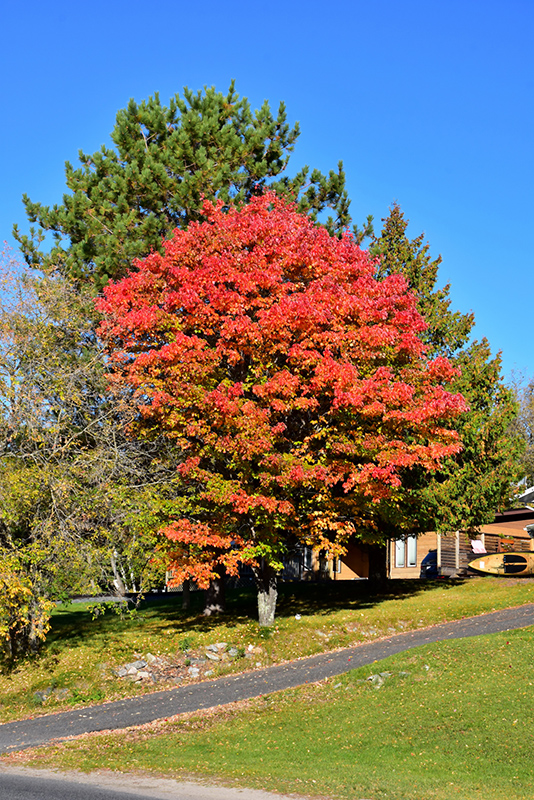
The Native tree that lights up New England yellow and red in fall; a great shade tree, but very intolerant of alkaline soils; fall color is not consistently red in the species, so the many named cultivars are often chosen.
Ornamental Features
Red Maple features showy clusters of red flowers along the branches in early spring before the leaves. It has green deciduous foliage which emerges red in spring. The lobed leaves turn an outstanding red in the fall. It produces red samaras from late spring to early summer. The furrowed silver bark and brick red branches add an interesting dimension to the landscape.
Landscape Attributes
Red Maple is a deciduous tree with a shapely oval form. Its average texture blends into the landscape, but can be balanced by one or two finer or coarser trees or shrubs for an effective composition.
This is a relatively low maintenance tree, and usually looks its best without pruning, although it will tolerate pruning. It is a good choice for attracting birds and squirrels to your yard. It has no significant negative characteristics.
Red Maple is recommended for the following landscape applications;
- Accent
- Shade
- Vertical Accent
- Naturalizing And Woodland Gardens
Planting & Growing
Red Maple will grow to be about 60 feet tall at maturity, with a spread of 40 feet. It has a high canopy with a typical clearance of 7 feet from the ground, and should not be planted underneath power lines. As it matures, the lower branches of this tree can be strategically removed to create a high enough canopy to support unobstructed human traffic underneath. It grows at a medium rate, and under ideal conditions can be expected to live for 80 years or more.
This tree does best in full sun to partial shade. It is quite adaptable, prefering to grow in average to wet conditions, and will even tolerate some standing water. It is not particular as to soil type, but has a definite preference for acidic soils, and is subject to chlorosis (yellowing) of the foliage in alkaline soils. It is somewhat tolerant of urban pollution. This species is native to parts of North America.








Disclaimer - This Plant Finder tool is an online resource representing many of the varieties that we carry over the course of the season, and is intended for informational purposes only. Inventory varies seasonally, so we cannot guarantee that every plant will be in stock at all times - please contact the store directly for current availability. It does not include our entire selection of plants, so be sure to visit our store to see varieties that may not be represented on this list.